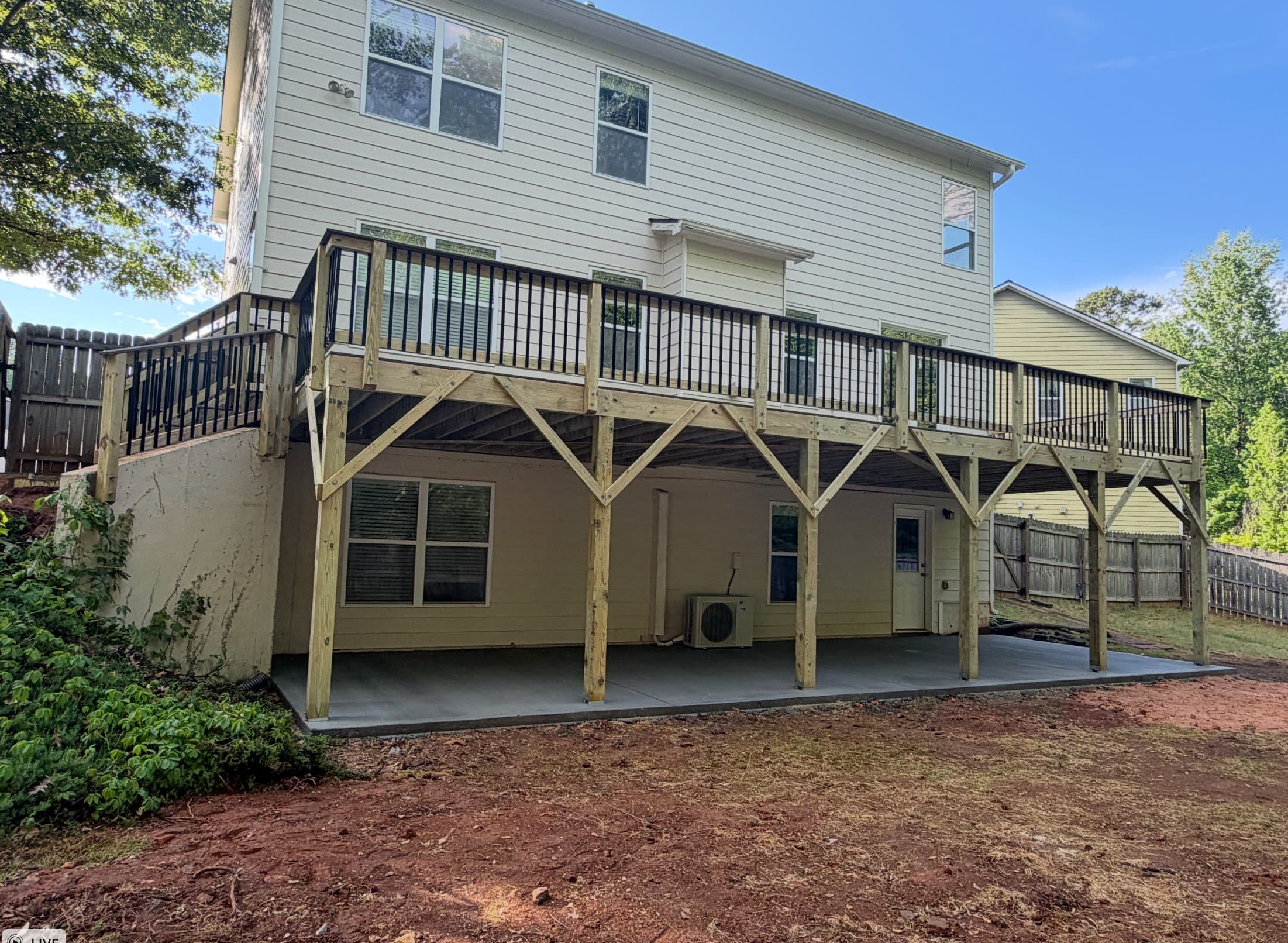
If you have an elevated deck—or are planning one—there's valuable space beneath it that often goes unused. Atlanta's frequent rain makes that under-deck area wet, muddy, and uninviting. Under deck drainage systems change everything, creating dry, usable space for storage, outdoor living, or a ground-level patio.
Water Management
Capture and redirect rainwater away from your foundation
Usable Space
Create a dry patio, storage area, or outdoor room below
Home Value
Add functional square footage to your property
How Under Deck Drainage Works
Water naturally drains through the gaps between deck boards. An under deck drainage system captures this water before it falls to the ground below, channeling it to gutters at the deck's perimeter. The result: the space below stays completely dry, even during Atlanta's heaviest thunderstorms.
There are two main approaches: above-joist systems that install on top of the joists (before decking), and below-joist systems that attach underneath the existing framing.
Under Deck Drainage System Options
Trex RainEscape
Type: Above-joist trough system
Cost: $4-7 per square foot (materials + installation)
Best for: New deck construction
Trex RainEscape is a butyl-based membrane system that installs directly on top of joists before decking goes down. Troughs between joists capture water and channel it to a gutter system. Because it's installed above the joists, the system is completely hidden from below—you see clean, exposed joists rather than a visible ceiling.
Pros: Completely concealed, works with any decking material, allows electrical/lighting installation on joists below, 20-year warranty
Cons: Must be installed during deck construction (not retrofit-friendly), adds labor time to deck build
DEK Drain
Type: Above-joist panel system
Cost: $5-8 per square foot (materials + installation)
Best for: New construction with finished ceiling desired
DEK Drain uses solid panels that install above the joists, creating both a drainage surface and a finished ceiling below. Water runs across the panels to perimeter gutters. The panels can be smooth or textured, and come in white or tan.
Pros: Creates a finished ceiling appearance, good water management, can include integrated lighting
Cons: Higher material cost, must be installed during construction, panels may discolor over time
Zip-Up UnderDeck
Type: Below-joist ceiling system
Cost: $8-12 per square foot (materials + installation)
Best for: Existing decks (retrofit)
Zip-Up and similar below-joist systems install underneath existing deck framing. Vinyl panels or aluminum slats attach to the joists, creating a waterproof ceiling. Water collects on the panels and drains to a gutter at one end.
Pros: Can be added to existing decks, creates finished ceiling appearance, available in multiple colors
Cons: Visible ceiling (some prefer exposed joists), higher cost than above-joist systems, reduces headroom by 2-4 inches
Custom Ceiling Systems
Type: Tongue-and-groove or beadboard ceiling
Cost: $15-25 per square foot (materials + installation)
Best for: High-end outdoor rooms
For a premium finish, tongue-and-groove cedar, pine, or PVC beadboard can be installed over a waterproof membrane. This creates a finished ceiling that looks like an indoor room while keeping the space below completely dry.
Pros: Beautiful finished appearance, can include recessed lighting and ceiling fans, adds significant value
Cons: Highest cost option, requires more maintenance (wood), longer installation time
Under Deck Space Ideas
Once you have a dry under-deck area, the possibilities expand dramatically. Here's what Atlanta homeowners are creating:
Ground-Level Patio
The most common use: a paved patio with outdoor furniture. Protected from rain and partially shaded, this becomes a comfortable outdoor living space even during afternoon thunderstorms. Add a ceiling fan and you have a cool retreat on hot summer days.
Outdoor Kitchen / Grilling Area
With the space protected from rain, you can install a built-in grill, Big Green Egg station, or full outdoor kitchen without worrying about weather exposure. Running gas, electric, and water is easier at ground level than on an elevated deck.
Hot Tub Location
Hot tubs are heavy—often too heavy for elevated decks. The protected space under a deck is an ideal location. The drainage system keeps rain out, and the deck above provides privacy and partial shade.
Storage Area
At minimum, a dry under-deck area provides protected storage for lawn equipment, outdoor furniture cushions, firewood, and seasonal items. Screen it in for cleaner, more organized storage.
Screened Room
Combine a drainage system with screen panels to create a bug-free outdoor room at ground level. Popular in wooded lots across Cherokee and Forsyth County where mosquitoes are thick.
Under Deck Drainage Costs in Atlanta (2026)
Here's what Metro Atlanta homeowners typically pay for under deck drainage systems:
Cost by System Type (400 sq ft deck)
- Trex RainEscape: $1,600-2,800 installed
- DEK Drain panels: $2,000-3,200 installed
- Zip-Up ceiling (retrofit): $3,200-4,800 installed
- Tongue-and-groove ceiling: $6,000-10,000 installed
Additional costs may include: gutter system ($300-600), downspout extensions ($100-300), patio surface below ($8-20/sq ft), electrical for lighting and fans ($500-2,000), and ceiling fans ($200-800 each including installation).
Installation Considerations
Minimum Height Requirements
For the under-deck space to be truly usable, you need at least 7-8 feet of clearance from the ground to the bottom of the joists. Lower decks can still benefit from drainage for storage or to keep the area below dry, but won't work as living space.
Proper Slope
All drainage systems require slope for water to flow to gutters. Above-joist systems typically slope 1/8 inch per foot toward the drainage end. Below-joist ceiling systems must be installed with proper pitch. Improper slope leads to pooling water and eventual leaks.
Gutter Sizing
Under deck gutters must handle the entire deck's water runoff. Standard 5-inch gutters typically work for decks under 500 square feet. Larger decks may need 6-inch gutters or multiple downspouts.
Condensation Management
In Atlanta's humid climate, condensation can form on drainage membranes and ceiling panels. Proper ventilation at the deck perimeter helps. Some systems include vented soffit panels to promote air circulation.
New Construction vs. Retrofit
New construction:If you're building a new elevated deck, install an above-joist drainage system (Trex RainEscape or similar) during construction. It's significantly easier and more cost-effective than retrofit options.
Existing decks:If your deck is already built, below-joist ceiling systems (Zip-Up, Under Deck Oasis, etc.) are your primary option. The deck boards don't need to be removed, though some installation access from above may be needed.
Ready to Create Dry Space Under Your Deck?
Precision Outdoor Construction installs under deck drainage systems throughout Metro Atlanta. Whether you're building a new elevated deck or want to retrofit an existing one, we'll help you choose the right system and create usable space below.
Free Under Deck Consultation
We'll assess your deck, discuss drainage options, and show you how to maximize your under-deck space.
Schedule Your Consultation